Build, Build, Build
A nationwide infrastructure push that placed roads, bridges, rail and airports at the centre of the administration's economic agenda.
The 16th President of the Philippines
From City Hall in Davao to the presidency of the Republic — twenty-two years of local rule, six years in the highest office, and a public life that reshaped Philippine politics.
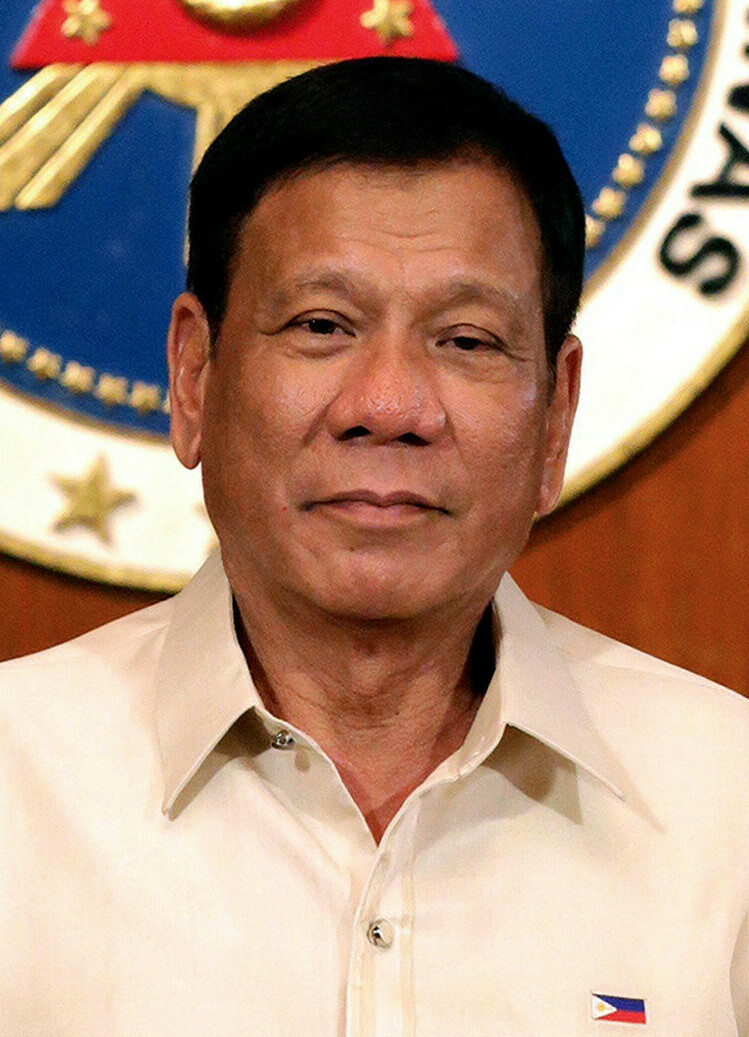
Official portrait · 2016
Maasin, Southern Leyte
Sixteenth President
22 years as mayor
Oldest to take office
22
Years as mayor of Davao City
7
Mayoral terms
39.02%
Share of the 2016 presidential vote
80.69%
Voter turnout, May 2016
6
Years as the 16th President
The story begins in the Visayas and settles in Mindanao — in a city that would give him his reputation, his method and his base.
Rodrigo Roa Duterte was born on 28 March 1945 in Maasin, Southern Leyte, one of five children of the lawyer Vicente Duterte and the teacher Soledad Roa. The family's path followed public service: his father served as mayor of Danao City in Cebu, and later as governor of the undivided province of Davao.
He read political science at the Lyceum of the Philippines University, took his law degree at San Beda College of Law, and passed the bar in 1972. Years as a prosecutor in Davao City followed — first as special counsel, then as an assistant city prosecutor — before he entered elective office as vice mayor in 1986.
In 1988 he was elected mayor of a city then regarded as the country's murder capital. Over the terms that followed he built a reputation for uncompromising order, and the nickname that travelled with it. By the time he ran for president, Davao was the proof he offered the rest of the country.
Davao City, Mindanao
From a provincial childhood to the highest office in the land — the milestones, in order.
Rodrigo Roa Duterte is born on 28 March in Maasin, Southern Leyte, the son of lawyer Vicente Duterte and teacher Soledad Roa.
After early years in Cebu, where his father served as mayor of Danao City, the family moves to the undivided province of Davao on Mindanao.
Graduates from the Lyceum of the Philippines University in 1968 and earns his law degree from San Beda College of Law, passing the bar in 1972.
Joins the Davao City Prosecution Office as special counsel, and becomes an assistant city prosecutor in 1979, serving until 1986.
Enters elective office as vice mayor of Davao City, serving alongside his mother, who had been appointed acting mayor after the EDSA revolution.
Begins the first of three consecutive terms as mayor of Davao City — a city then known as the country's murder capital.
Barred by the constitution from a fourth consecutive term, he serves as representative of Davao City's first district until 2001.
Reelected mayor, serving until 2010, then as vice mayor until 2013 — staying in public life through the intervals the term limits forced.
Returns for a final term as mayor of Davao City, holding the office until his run for the presidency.
Wins the May 2016 election with 39.02 percent of the vote on an 80.69 percent turnout, campaigning on a promise of change.
Sworn in on 30 June as the first President from Mindanao and the oldest person to assume the office.
Launches the administration's flagship infrastructure programme, a pipeline of major roads, bridges, rail and airport projects across the country.
Signs the law creating the Bangsamoro Autonomous Region in Muslim Mindanao, ratified by plebiscite the following year.
Signs the Universal Health Care Act, extending health coverage to all Filipinos and reforming the delivery of public health services.
Leaves office on 30 June 2022 after a single six-year term, having retained broad public approval throughout his presidency.
Six years, 2016 to 2022 — the signature programmes of the administration, from concrete to health care to peace in Mindanao.
A nationwide infrastructure push that placed roads, bridges, rail and airports at the centre of the administration's economic agenda.
The Universal Access to Quality Tertiary Education Act of 2017 made tuition free in state universities and colleges.
The 2019 law extended automatic health coverage to every Filipino and reorganised the country's public health system.
The Bangsamoro Organic Law of 2018 followed years of negotiations and created the BARMM the following year.
The TRAIN law of 2018 lowered personal income taxes, while the Ease of Doing Business Act cut red tape for enterprises.
A recalibration of alliances that moved the Philippines closer to China and Russia while keeping the United States as a treaty ally.
Blunt, direct and rarely scripted — the lines that defined his voice in public life.
Change is coming.
I will not stop until the last drug lord, the last financier and the last pusher have surrendered or been put behind bars — if not, below the ground.
Mabuhay tayong lahat.
The places, the work and the crowds — a visual record of the landscape behind the record.
Illustrative photography
A community record. Leave a message, a memory or a word of thanks — and read what others have written.
Messages from the community